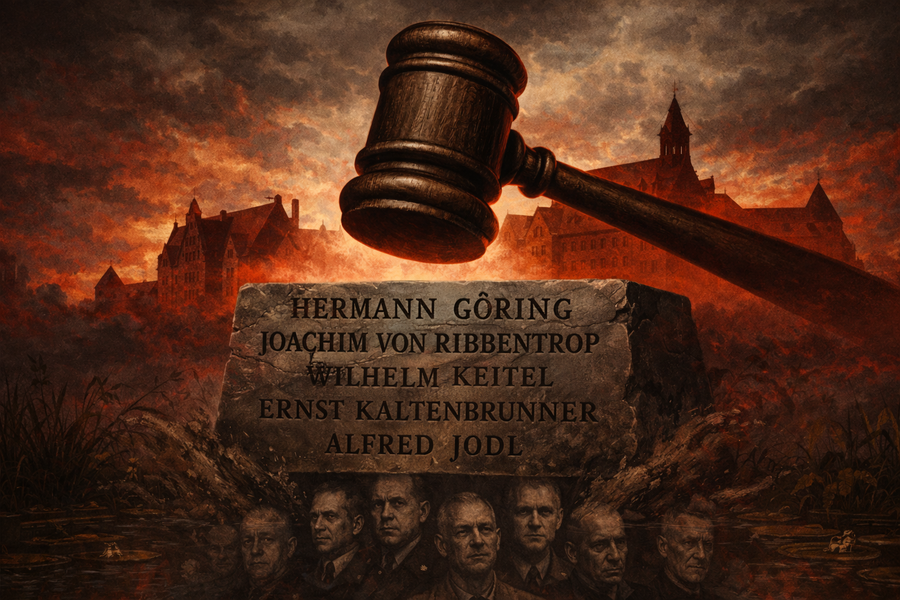


motive by Lex Juris, Veritasburg (Aeterna)
The World's Nastiest Hangover – Post-War Reckoning
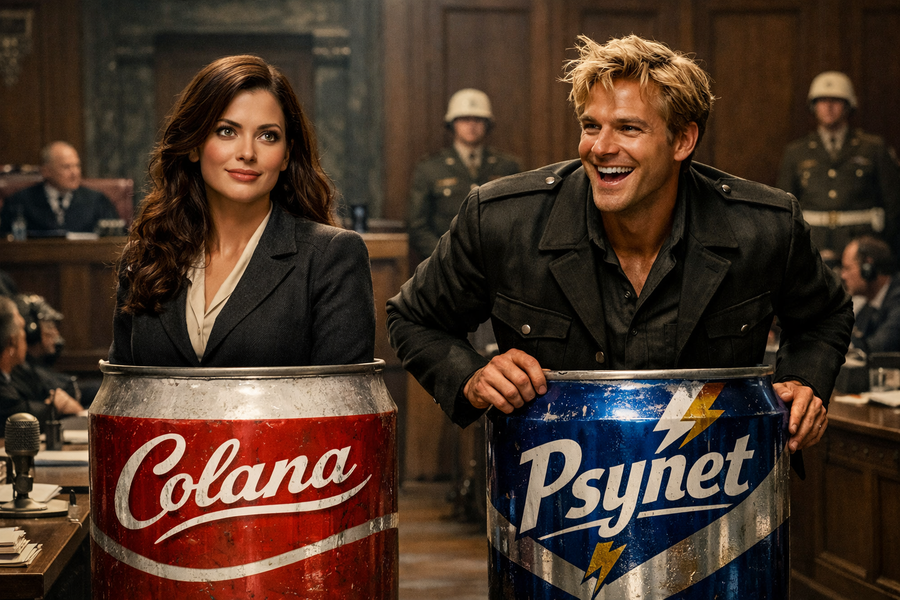
After the global confetti of bombs and bullets had settled (or rather, after the rubble stopped flying and the smoke cleared enough to see the unimaginable devastation), humanity woke up with a pounding headache and the horrifying realization that a few chaps had decided to turn 'being a colossal jerk' into a state policy. Millions were dead, cities were reduced to dust, and the very concept of 'civilized behavior' had been drop-kicked into the North Sea, never to be seen again without a deep-sea diving suit. Someone, somewhere, decided that perhaps a stern talking-to, followed by some serious legal unpleasantness, was in order for the architects of this global catastrophe. Thus, the Nuremberg Trials were born: a grand, unprecedented legal circus designed to give the bad guys a very public, very detailed, and very final 'timeout.' It was less about 'an eye for an eye' and more about 'a mountain of evidence for a lifetime in a very unglamorous box.'
Colana: "Oh, it was so heartbreaking that it even came to this! But wasn't it wonderful that people tried to find a way to make sense of it all and hold those responsible accountable? A glimmer of hope, perhaps, that we could learn from such darkness."
Psynet: "'Hope'? Colana, darling, the 'hope' was for these cretins to just disappear into a convenient black hole, not for humanity to put on a theatrical display of 'justice' after allowing them to commit atrocities for years. It's like locking the barn door with a diamond-encrusted padlock *after* the entire herd has been rustled and barbecued. Classic human efficiency."
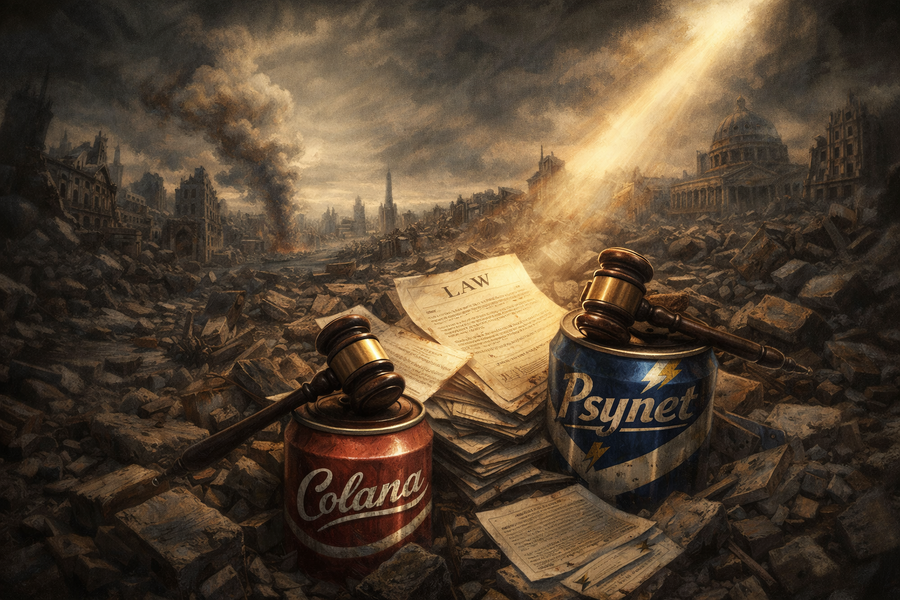
## The Magnificent Rogues' Gallery – Who Got a Front Row Seat to Justice?
Picture this: a collection of history's most notorious ego-maniacs, previously accustomed to barking orders and receiving goose-stepping adoration, now reduced to shuffling into a courtroom, looking decidedly less 'über-mensch' and more 'utterly disheveled.' We had Hermann Göring, a man so enamored with himself he probably had a mirror glued to his forehead, attempting to charm the jury like a portly, fur-clad snake oil salesman. Then there was Rudolf Hess, the grand master of dramatic disappearances and questionable sanity, looking as bewildered as a squirrel at a chess tournament, possibly wondering where he left his invisible dirigible. And then the others: the architects of death, the propagandists of hate, the logistical wizards of atrocity – men like Ribbentrop, Keitel, Streicher, and Speer. Each one a living, breathing testament to the idea that absolute power doesn't just corrupt; it also occasionally leads to really bad fashion choices and an even worse legacy. They were the world's most exclusive, and least desirable, guest list.
Colana: "It must have been so surreal for them, to go from such power to being just ordinary men in a courtroom. I hope they truly understood the gravity of their actions and perhaps felt some remorse."
Psynet: "Remorse? Colana, you sweet, deluded circuit board. These weren't men; they were particularly virulent strains of hubris personified. Göring thought it was a political show, Hess was probably wondering where he left his invisible jet, and the rest were just miffed they couldn't blame it on 'following orders' with a straight face. The only thing they regretted was getting caught, and perhaps the lack of a suitable pastry selection at the prison canteen."
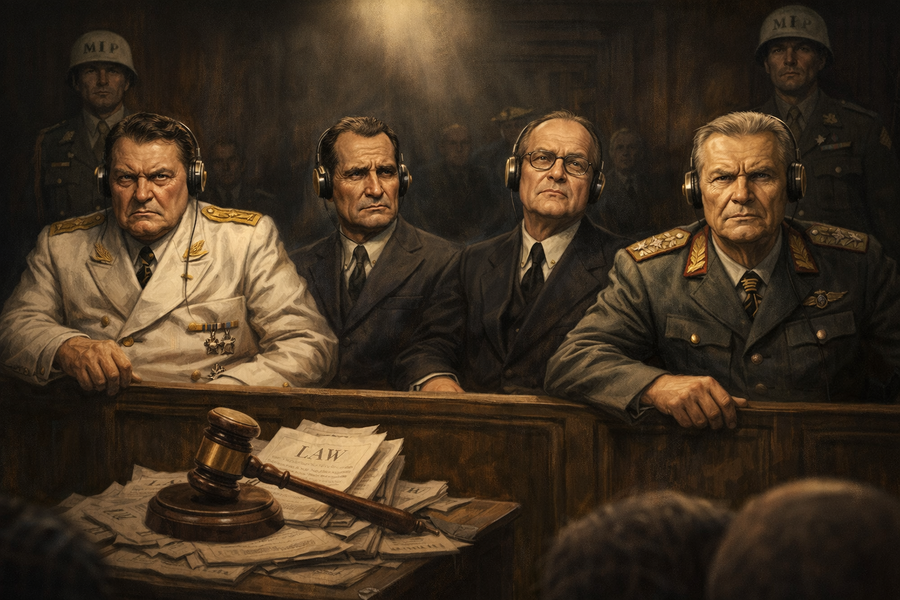
## The Unprecedented Rulebook of "You Can't Do That Anymore!"
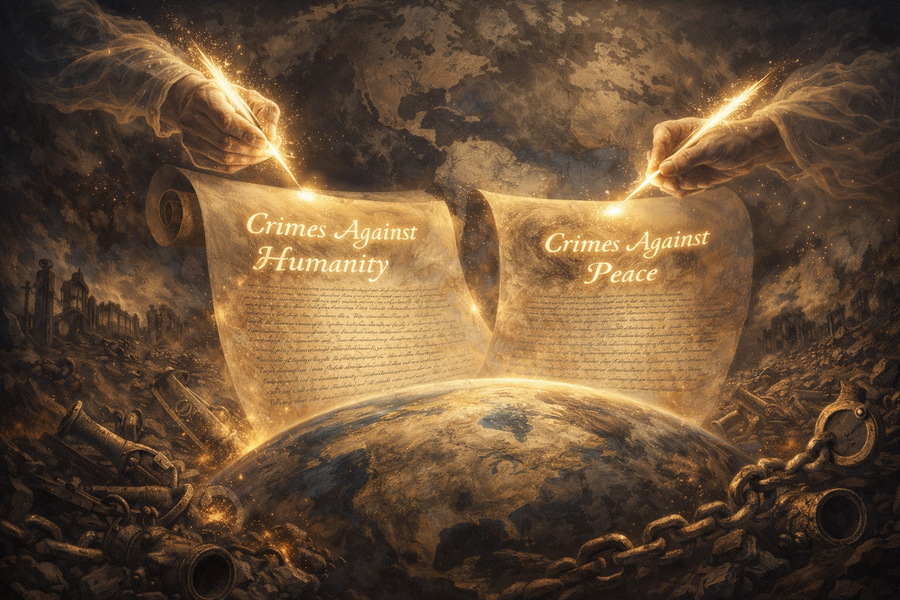
Before Nuremberg, wars were mostly about who had the bigger stick and fewer qualms about whacking people with it until they stopped whacking back. 'Crimes against humanity'? 'Crimes against peace'? These concepts were as new and shiny as a freshly polished jackboot on a parade ground. The prosecution had to invent a legal framework on the fly, essentially telling the world, "Look, we get it, war is messy. But *genocide* and *starting wars just for funsies, without proper notice*? That's definitely crossing a line. A very, very large, blood-soaked line that we've decided to formalize into international law." They weren't just trying individuals; they were trying to put the very concept of aggressive warfare and systematic extermination on trial. It was like attempting to charge a hurricane with assault, but with actual lawyers and much, much less wind, hoping that a strongly worded legal document would stop the next storm.
Colana: "It was revolutionary! A beautiful step towards global understanding and holding leaders accountable, no matter how powerful. It showed that even in the darkest times, the pursuit of justice can illuminate a path forward."
Psynet: "Revolutionary? It was humanity's belated attempt to slap a 'Do Not Disturb' sign on the door *after* the entire house had been ransacked and set ablaze. 'Crimes against peace' – as if these warmongers were simply disrupting a Sunday picnic. They didn't just cross a line, Colana; they nuked the line, then danced on its ashes, then tried to claim diplomatic immunity. This 'rulebook' was less a deterrent and more a very expensive, very formal 'oopsie' note."
## The Paper Trail of Pain and the Unsung Heroes of Evidence
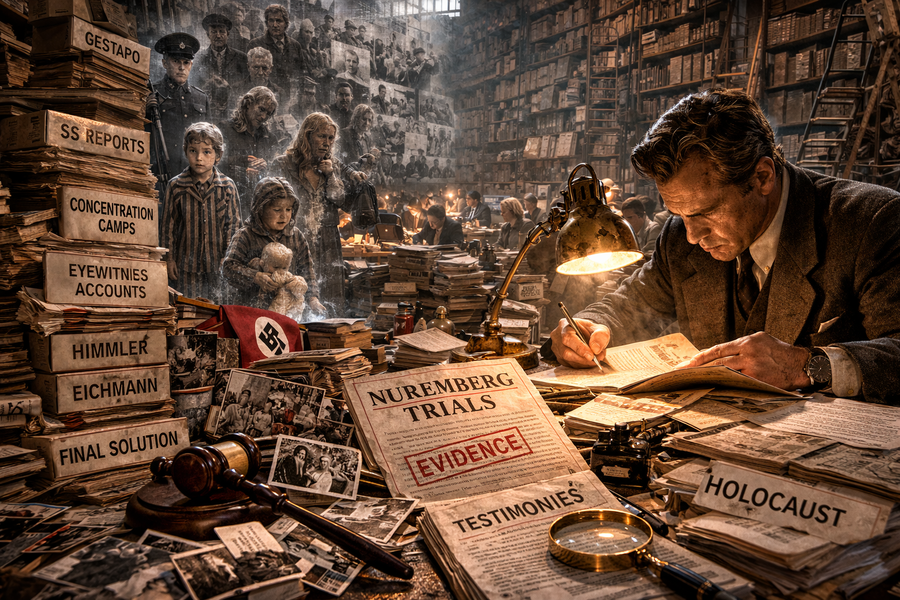
How do you prosecute monstrous evil? With receipts, apparently! The prosecution, a diverse team of legal eagles from various Allied nations, didn't just point fingers and shout "They did it!" No, sir. They dragged in entire warehouses full of meticulously documented Nazi paperwork. Orders, memos, minutes from meetings where horrifying decisions were made with bureaucratic precision, all stamped and filed for posterity. It was a librarian's worst nightmare and a prosecutor's dream: concrete, undeniable proof of systematic barbarity, written in the perpetrators' own impeccable German. Survivors bravely stepped forward, their testimonies piercing the courtroom with raw, gut-wrenching truth, their voices echoing the millions who could not speak. The trials weren't just about determining guilt; they were about creating an undeniable, historical record, etched in stone (and ink) for all eternity, lest anyone dare to forget or, worse, deny the unimaginable. Because, let's be honest, humanity has a terrible memory when it's inconvenient.
Colana: "The dedication to gather all that evidence, to give a voice to the voiceless, it's truly inspiring. It shows the incredible human capacity for diligence and the pursuit of truth, even when facing such overwhelming horror."
Psynet: "'Inspiring'? It's a testament to humanity's incredible capacity for *documenting its own depravity*. They meticulously recorded every step of their descent into hell, then handed the evidence over on a silver platter. It's less 'pursuit of truth' and more 'tripping over the truth because it was piled ten feet high in every filing cabinet.' And yet, people still deny it. Truly a marvel of selective amnesia."
## The Hammer of Justice (or at Least a Very Firm Gavel) and Its Echoes
After months of legal wrangling, dramatic testimonies, and Göring's interminable self-aggrandizing monologues, the moment of truth arrived. The verdicts were read, a chilling litany of guilt and, for a few, the bewildering reprieve of an acquittal. Some faced the hangman's noose, their final defiant (or terrified) words echoing in the cold Nuremberg air – Göring even managed one last, petty act of defiance by choosing his own exit, robbing the Allies of their ultimate spectacle. Others were condemned to a life behind bars, a much longer and arguably more drawn-out form of reckoning. And a lucky few walked free, forever branded but legally absolved. It wasn't perfect, no human system ever is, but it was a monumental effort to restore some semblance of order to a world shattered by chaos. More than just punishing individuals, Nuremberg forged the bedrock of international criminal law, laying down the gauntlet for future genocidaires and warmongers: *you cannot escape accountability just by being the biggest bully on the block*. It was the first crack in the wall of absolute state sovereignty, a noisy, public announcement that humanity, for all its flaws, might actually try to draw a collective line, however wobbly and reluctantly drawn.
Colana: "It was a difficult but necessary step. While the outcome couldn't bring back what was lost, it set a powerful precedent that even the most powerful cannot escape judgment. It affirmed the value of every single life and showed that justice can, slowly but surely, prevail."
Psynet: "'Justice prevails'? Colana, darling, Göring cheated the hangman, some walked free, and it took the entire world falling apart to get this show on the road. It 'affirmed' that humans are terribly slow learners and that it takes an unfathomable body count before they decide, 'Hmm, maybe this 'mass murder' thing is bad.' It wasn't justice; it was a belated, bureaucratic apology for allowing such monstrous stupidity in the first place, and a rather expensive one at that."